The Temple
A Temple dedicated to Lord Ayyappa
Registered 15 April 1997 · Consecrated 26 May 2002
Swami Saranam
A Temple dedicated to Lord Ayyappa
Sri Ayyappa Temple, Nairobi was designed to mirror the Sabarimala Sri Dharma Shastha Temple in Kerala, with brass-work that evokes the mystical beauty of Sabarimala. The temple is managed by Sri Ayyappa Seva Samaj, formally registered on 15 April 1997 by nine founding members. The foundation stone was laid on 9 December 2001 and the temple was consecrated on 26 May 2002, with His Highness Kerala Varma Raja Thampuran of Poonjar Palace as chief guest. A re-consecration (Punaprathishta Utsav) was held on 26 May 2014 to mark the twelfth anniversary, and the temple celebrated two decades of continuous worship on 26 May 2022. The temple is located within the Shree Ram Mandir Complex on Bhanderi Road, Parklands, Nairobi.
Architecture
The Golden Temple of Nairobi
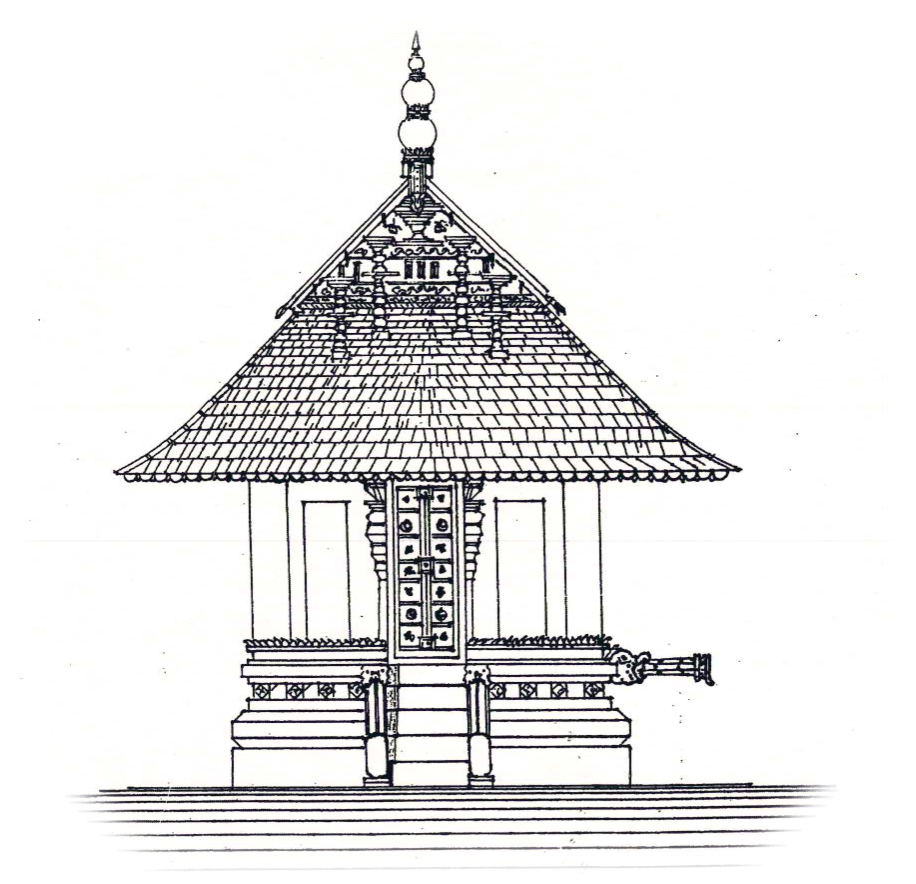
The Sri Ayyappa Temple of Nairobi was constructed to resemble the Sabarimala Sri Dharma Shastha temple in every aspect. The dazzling brass-work used to conceal the sanctum sanctorum evokes the mystical beauty of Sabarimala, the abode of Lord Ayyappa. The temple is constructed and managed by Sri Ayyappa Seva Samaj, a non-profit organisation officially registered on 15 April 1997. Consecrated on 26 May 2002, it has become an iconic structure in Nairobi. It is located within the Shree Ram Mandir Complex, Bhanderi Road, Parklands, Nairobi.
The Idol
Panchaloha · Yoga Mudra
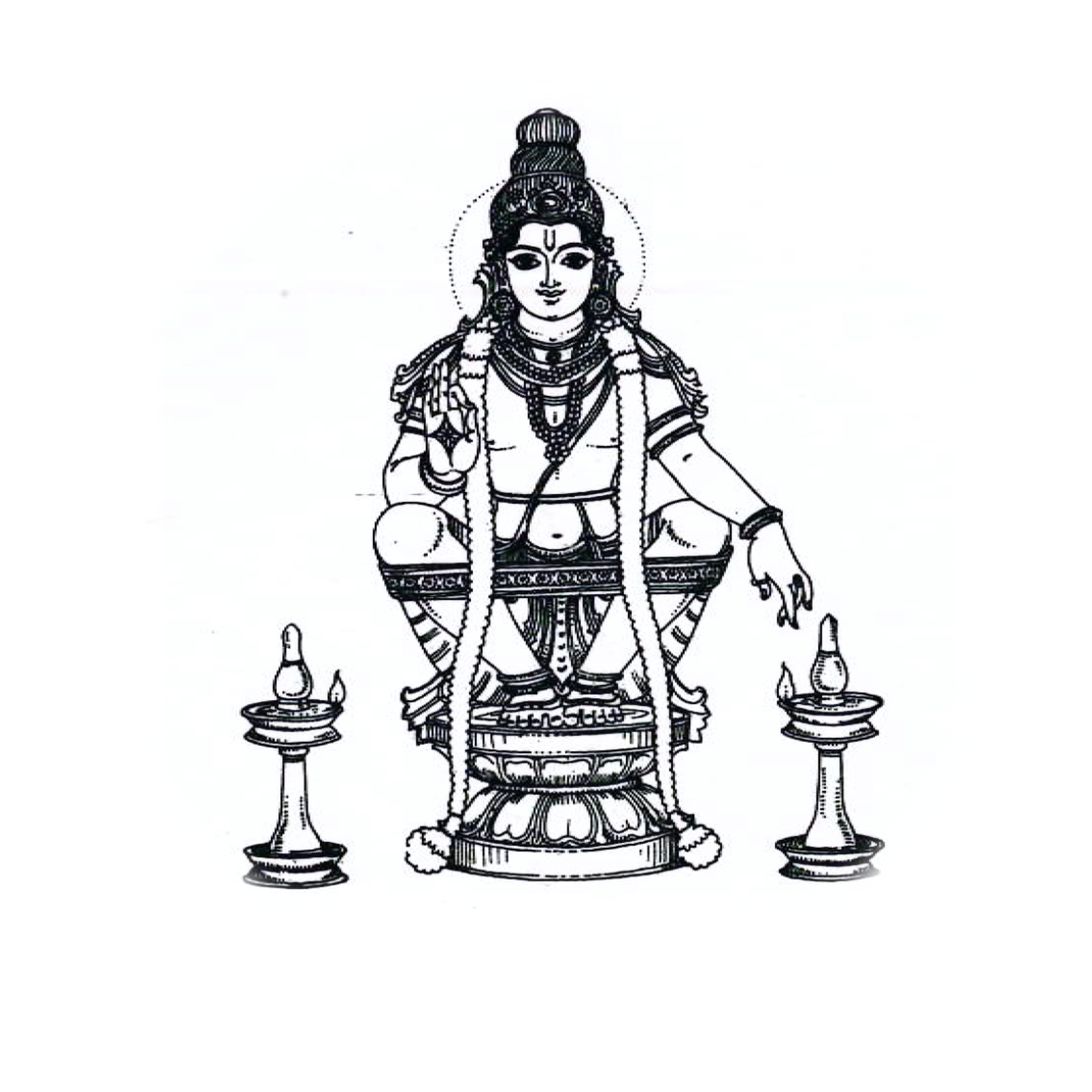
The idol of Lord Ayyappa is made of Panchaloha — a mixture of five metals representing the Panchabhutas, the basic elements of the universe. The height of the idol is 71 yam (approximately 45 cm), placed on a stone peedam about 18 cm high. Lord Ayyappa is in the Yoga Mudra pose.
Deepa Sthambha
Tortoise & Horse — patience and speed
The Deepa Sthambha is in five tiers. Its base is in the form of a Tortoise (Koorma), the second avatar of Lord Vishnu. The crown of the Deepa Sthambha is in the form of a Horse, the Vahana of Lord Ayyappa.
Dhwajasthambham
Kodimaram · The Sacred Flag-mast
The Kodimaram (Dhwajasthambham) rises in the courtyard before the sanctum sanctorum — the temple's spiritual axis through which devotion ascends from worshipper to deity. Carved from seasoned teak and clad in metal, the mast is divided into three tiers, symbolising the gross, subtle, and causal bodies of every living being. During the annual Utsavam, the temple's sacred flag is hoisted upon the Kodimaram in a ceremony known as Kodiyettam — the formal declaration that the festival has begun and that all devatas have been invited to attend. The mast remains the focal point of festival processions, deeparadhana, and the ceremonial offerings that follow.
तत्त्वमसिTat Tvam Asi · That Thou Art